

WHAT IS A CABLE LUG?
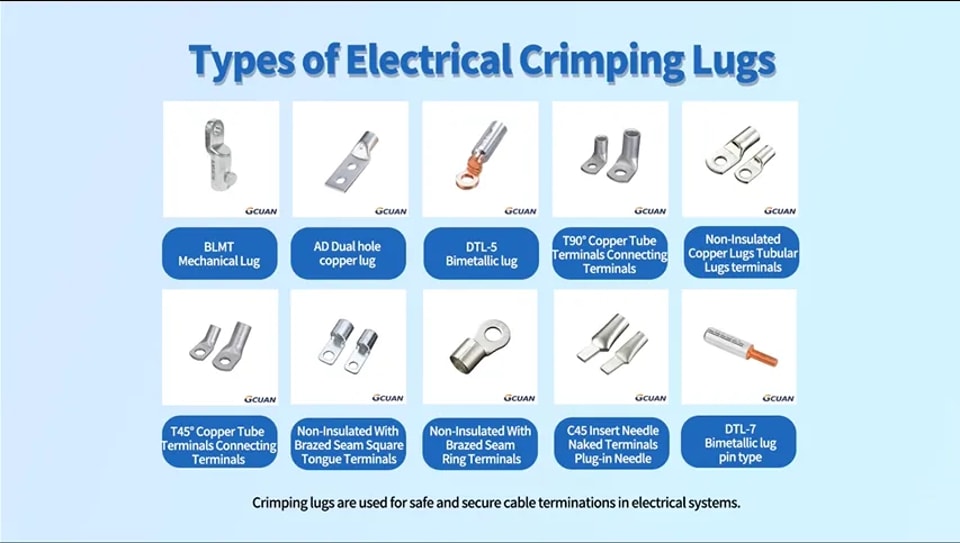
Introduction
Choosing the right cable accessories is just as important as selecting the correct cables for power transmission. Proper compatibility between cables and accessories ensures safe, reliable, and long-lasting electrical connections. Among these accessories, cable lugs play a critical role in connecting conductors to electrical equipment.
What Is A Cable Lug?
A cable lug, also known as a cable terminal or connector, is a device used to connect a cable conductor securely to electrical equipment or another cable. It provides reliable electrical and mechanical connections, ensuring efficient current flow while allowing easy installation, maintenance, and replacement.
Cable lugs are widely used in electrical systems such as power distribution, industrial equipment, automotive wiring, and battery connections.
Types Of Cable Lugs
Cable lugs can be classified based on shape, material, and insulation:
By Shape
l Ring Type (O-type): Used for secure bolt connections
l Fork Type (U-type): Easy installation and removal on screw terminals
l Pin Type: Suitable for push-in or spring terminals
l Blade Type: Used for flat terminal connections
By Material
l Copper lugs (most common, excellent conductivity)
l Aluminum lugs (lighter, cost-effective)
l Bimetallic lugs (for connecting copper and aluminum cables)
By Insulation
l Non-insulated lugs
l Insulated lugs (PVC, nylon, etc.)
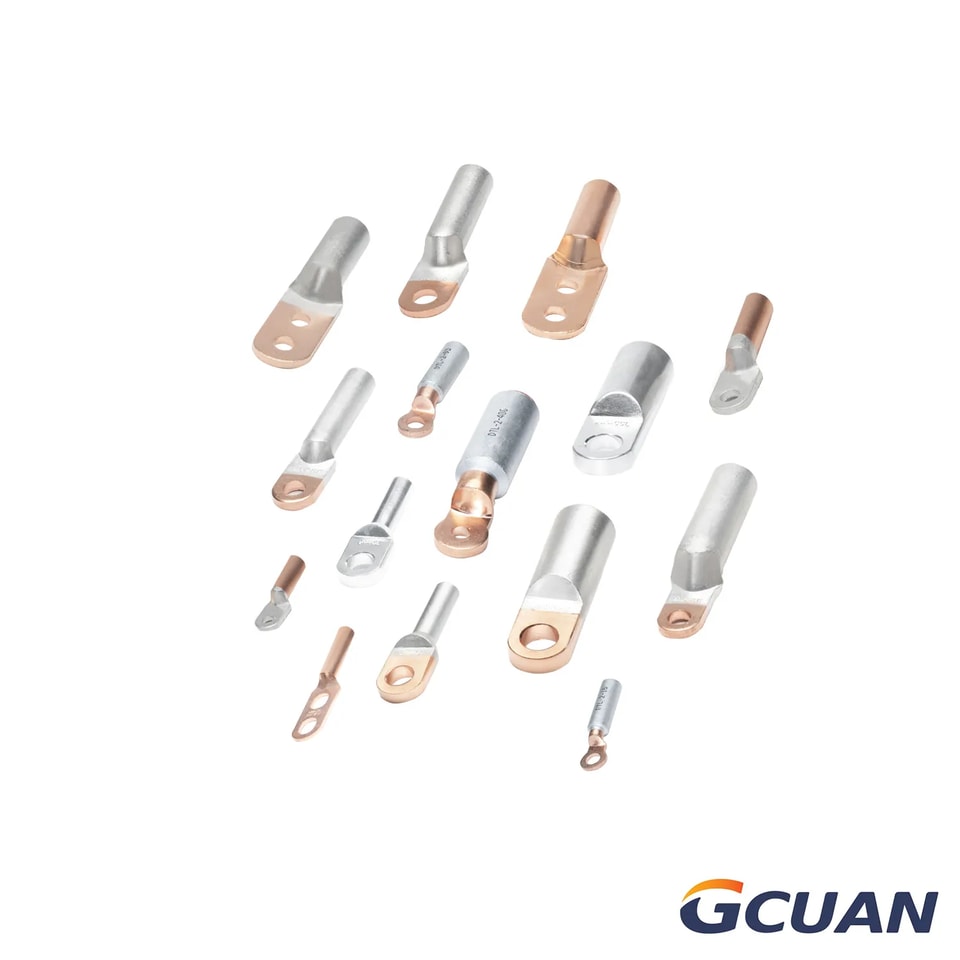
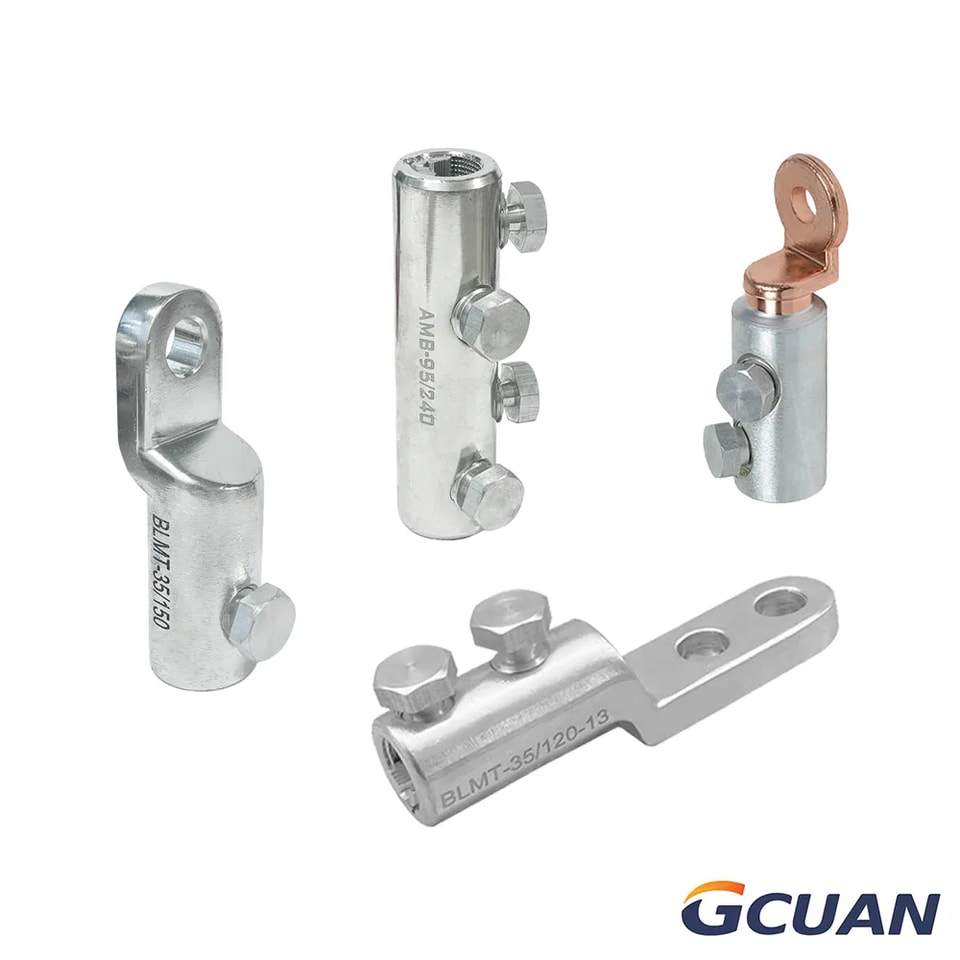
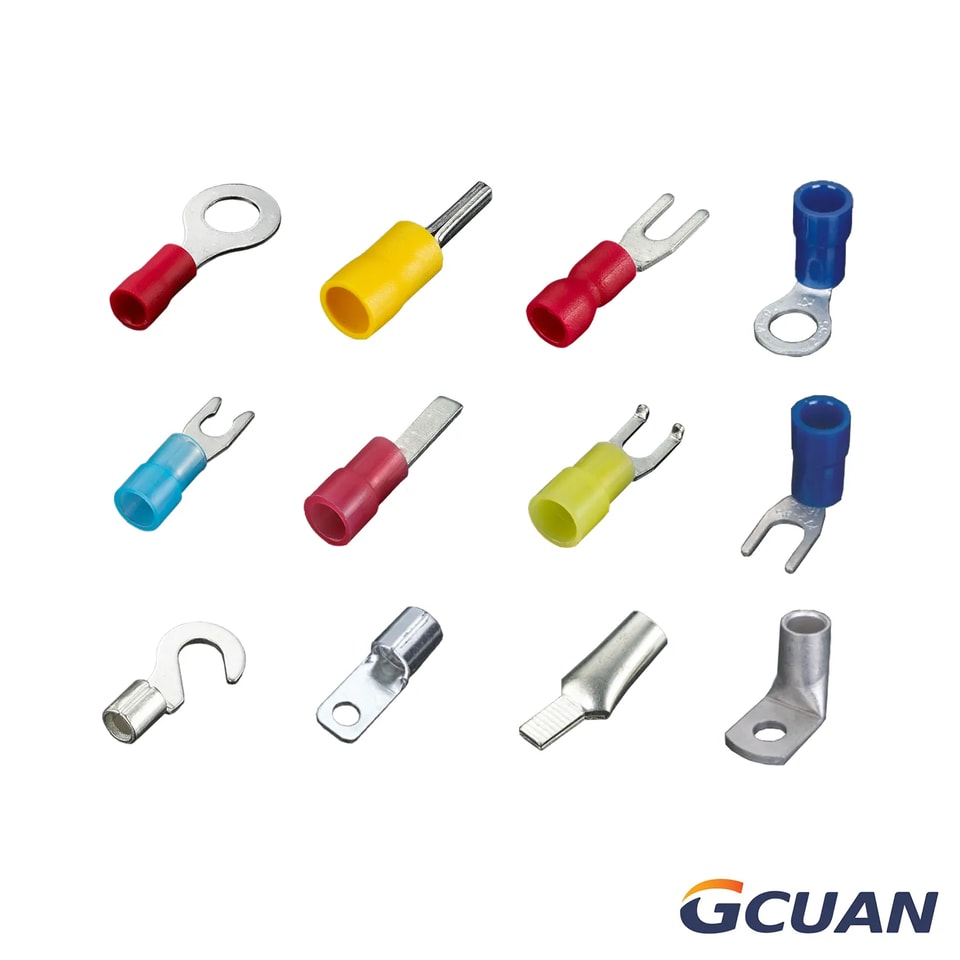
Figure 1: Cable lugs of different types
Applications
Cable lugs are used in applications where a secure and durable connection is required, especially when direct cable connection is impractical. Common applications include:
l Power distribution systems
l Electrical panels
l Automotive battery connections
l Industrial machinery
l Renewable energy systems
Crimping Method
Crimping is the most widely used and recommended installation method for cable lugs. It involves using a specialized crimping tool to compress the lug barrel tightly around the conductor, creating a secure mechanical and electrical connection.
The crimping process deforms the metal of the lug so that it tightly grips the cable strands, minimizing air gaps and reducing electrical resistance. When properly executed, crimping provides a gas-tight connection that prevents oxidation and ensures long-term stability.
Advantages:
l Fast and efficient installation
l Consistent and reliable connection quality
l Low electrical resistance
l Suitable for mass production and field installation
l No need for heat or additional materials
Applications:
Crimping is commonly used in power distribution systems, control panels, automotive wiring, and industrial equipment. It is especially suitable for environments subject to vibration, as the connection remains stable over time.
Important Notes:
l Always use the correct crimping tool and die size
l Match the lug size with the cable cross-section
l Poor crimping may lead to overheating or connection failure

Figure 2: Crimping Method