

Low-Cost vs High-Quality Heat Shrink Tubing What's the Difference?
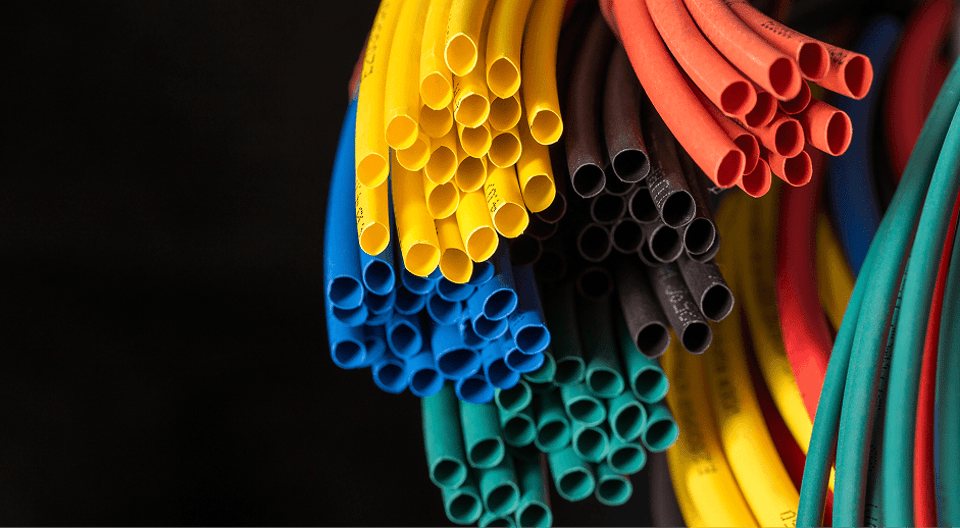
01 Material Is Everything: PVC vs Polyolefin
Optimal results for heat shrink tubing usage can largely depend upon the proper material of construction. Ease-of-use, fit-for-purpose performance characteristics (such as min/max temperature exposure, flame resistance and cosmetic appearance) and direct cost can all vary based upon the underlying material formulation.
While PVC heat shrink is very common and economical, many applications require the benefits afforded by polyolefin heat shrink.
02 How Low-Cost PVC Tubing Underperforms
PVC heat shrink tubing becomes rigid and brittle below 0°C, which can lead to cracking under mechanical stress. Its maximum continuous operating temperature of 105°C limits its use in high-heat environments. PVC burns easily if touched with soldering irons and may shrink unevenly if heating is inconsistent. The material can also produce unpleasant odors during heating.
PVC is more prone to cracking and less resistant to extreme conditions. Polyolefin is also easier to apply and lasts longer, making it ideal for a wide range of applications, from automotive to marine projects.
03 How High-Quality Polyolefin Tubing Performs
Polyolefin heat shrink tubing requires higher shrink temperatures (120–143°C) but shrinks quickly and uniformly. It can tolerate brief contact with soldering irons without burning, making it forgiving during installation. The material maintains consistent shrink ratios and recovers fully even with uneven heating.
Polyolefin heat shrink tubing has an operating range of -55°C to 135°C. Polyolefin's flexibility and superior strain resistance make it ideally suited for wire splices, connections, and harnesses.
04 When to Choose Each Type
Choose PVC when you need: a low-cost solution, applications in ordinary consumer electronics, very high transparency or rich colors for identification, and no strict requirements for temperature resistance or halogen-free environmental standards.
Choose polyolefin when you need: high reliability, long-life application scenarios, higher operating environmental temperatures, compliance with halogen-free environmental and safety flame retardant standards, and requirements for the tubing to remain soft and elastic or to have a high shrinkage ratio.
05 Side-by-Side Comparison
Parameter | Low-Cost (PVC) | High-Quality (Polyolefin) |
Operating Temp. | Up to 105°C max | -55°C to 135°C continuous |
Cold Flexibility | Brittle below 0°C | Flexible down to -55°C |
Shrink Uniformity | Uneven with inconsistent heat | Consistent even with uneven heat |
Chemical Resistance | Limited | Resistant to chemicals, oils, UV |
Soldering Iron Contact | Burns easily | Tolerates brief contact |
Quality Consistency | Varies batch to batch | Stable, certifiable (UL/MIL-spec) |
Best Application | Indoor electronics, prototyping | Automotive, marine, industrial |
Cost | Lower upfront | Higher upfront, longer service life |