

Why Cables Need Cable Clamps
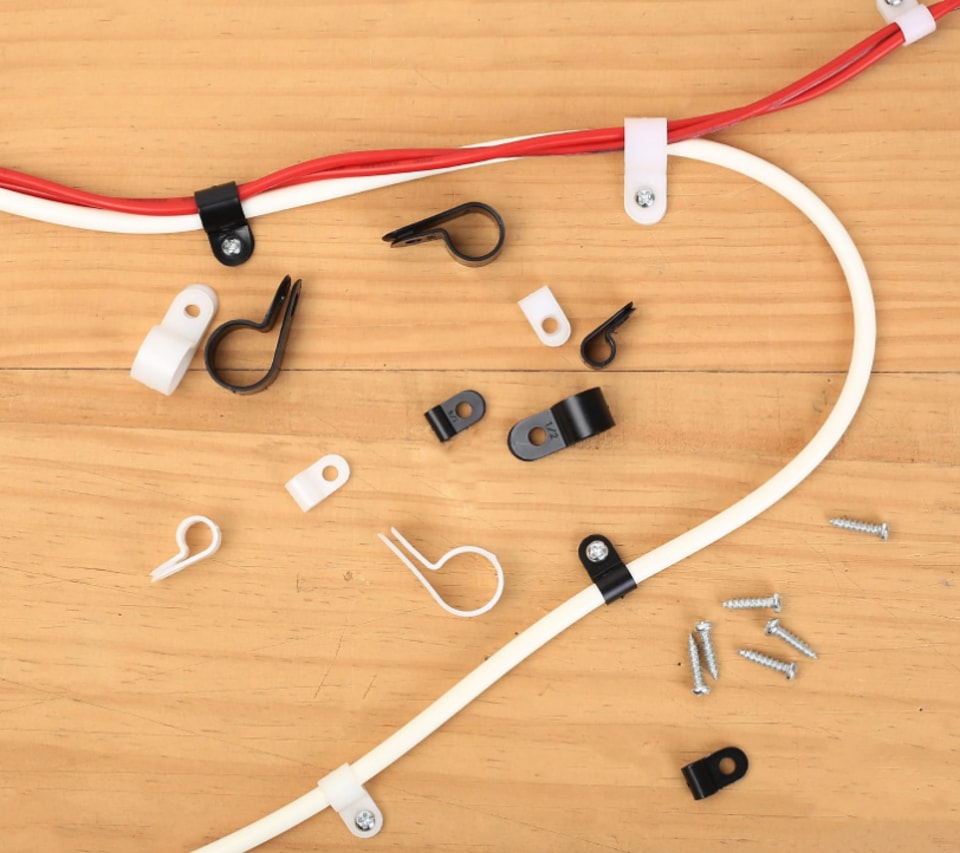
Cable clamps are essential cable management tools that secure, organize, and protect cables across residential, automotive, industrial, and outdoor environments. They prevent cable movement, strain, and abrasion, reducing the risk of electrical failures, safety hazards, and equipment damage. |
1. Prevent Cable Movement & Wear
Their primary function is to prevent cables from moving or shifting, which can cause wear and tear or disrupt the electrical flow. In instances where vibrations are prevalent, such as in automotive or machinery environments, cable clamps become particularly important. They counteract the displacement of cables due to motion, which might otherwise lead to significant electrical disruptions.
Proper cable support prevents excessive bending, vibration, and friction, all of which can degrade cable insulation over time.
2. Reduce Fire & Short-Circuit Risk
A cable clamp protects the cable from abrasion, cuts, or nicks that could expose the conductors and create a fire hazard or a shock hazard. It prevents strain on the cable and its connections, which could cause loose wires, arcing, overheating, or short circuits.
3. Distribute Mechanical Stress Evenly
Cable clamps help distribute physical and mechanical stress evenly across wires, preventing concentrated stress points that can result in injuries or accidents. Electrical installation standards emphasize the importance of securing cables to prevent strain on connections and reduce mechanical stress that can lead to system failures.
4. Protect Against Harsh Environments
Cables in industrial environments are often exposed to extreme conditions. Cable clamps protect cables from these stresses by keeping them securely fastened in place, reducing the risk of damage caused by friction, bending, or excessive tension. Weather-resistant clamps protect cables from moisture, corrosion, and UV exposure in outdoor and marine installations.
5. Support Heat Dissipation & Signal Integrity
Spacing cable clamps properly is crucial for effective heat dissipation and preventing potential overheating of cables during operation. Incorrect spacing often leads to overheating, causing degradation in cable integrity and performance. Compliance with industry standards like ANSI/TIA-568 dictates the use of specific cable management techniques to avoid cable stress and maintain system longevity.
6. Applications by Environment
Environment | Role of Cable Clamps |
Residential | Secure cables in junction boxes; comply with NEC Sec. 314.17(C); prevent fraying and fire hazard |
Automotive | Secure wiring harnesses; protect from vibration, heat, and movement; prevent engine interference |
Industrial | Prevent cable entanglement on machinery; reduce wear; improve workplace safety and uptime |
Outdoor / Marine | Resist moisture, corrosion, and UV degradation in exposed environments |
Data / Telecom | Maintain signal integrity; prevent bend-radius violations per ANSI/TIA-568 |